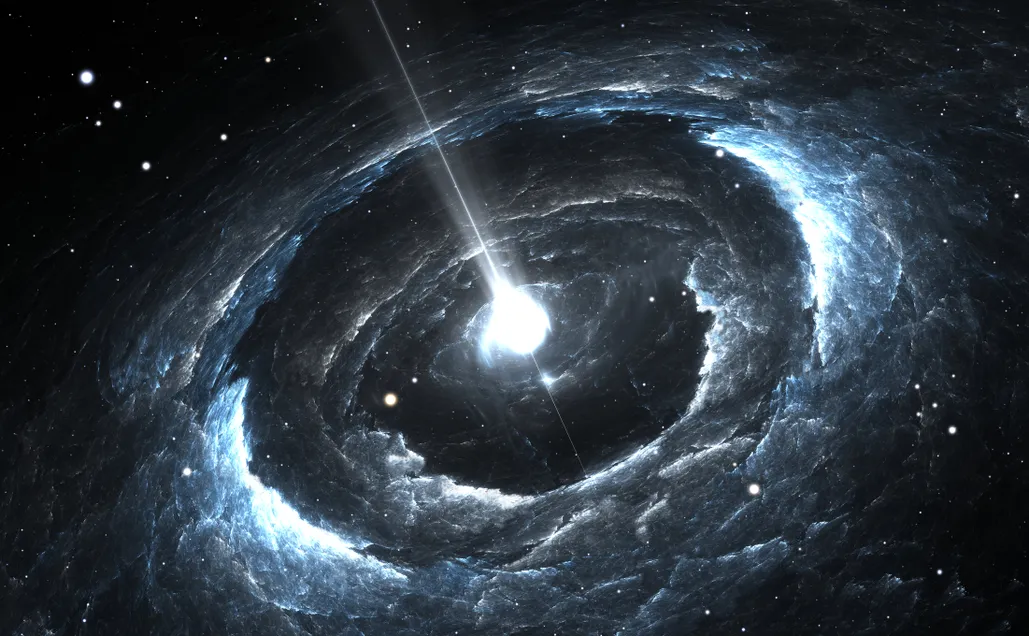
Welcome to My Page about Neutron Stars!
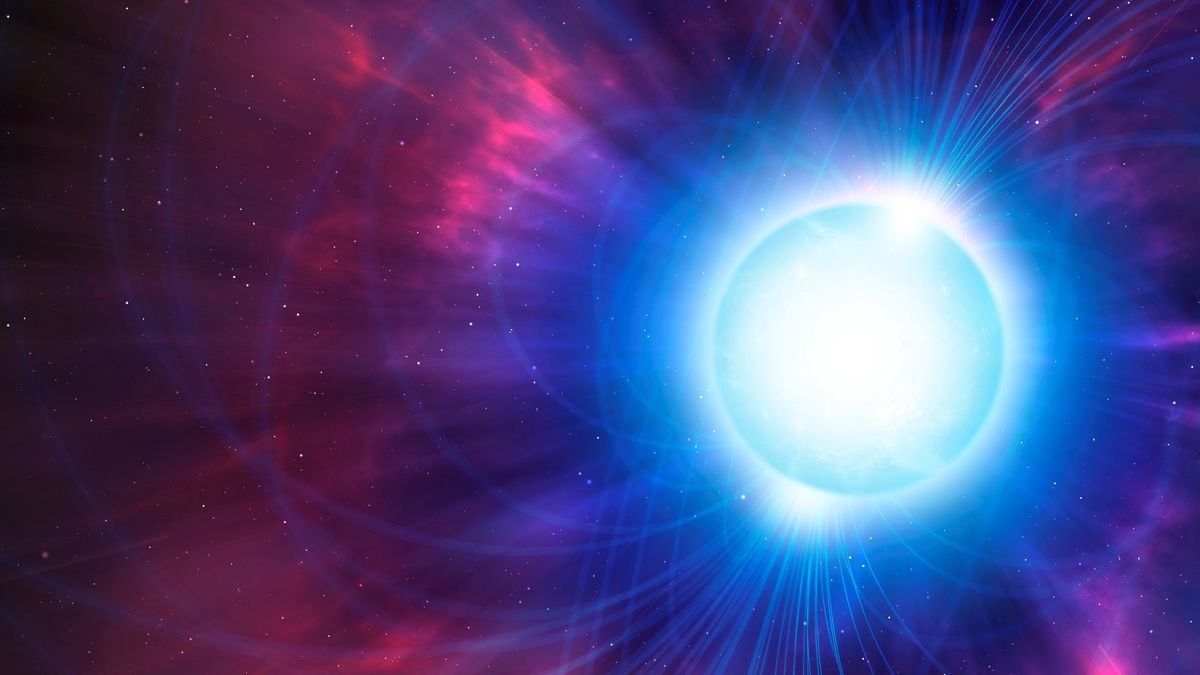
Neutron stars are incredibly dense remnants of massive stars that have undergone a supernova explosion. When a star exhausts its nuclear fuel, it collapses under its own gravity, leading to the formation of a neutron star. These stars are primarily composed of neutrons, which are subatomic particles with no electric charge.
Typically, a neutron star has a radius of about 10 kilometers but can contain more mass than our Sun. This extreme density causes them to have very strong gravitational and magnetic fields. Some neutron stars are also observed as pulsars, emitting beams of radiation that sweep across space, making them appear to pulse as they rotate. Neutron stars provide valuable insights into the fundamental physics of matter under extreme conditions.
Interesting Facts
- Incredible Density: Neutron stars are incredibly dense; a sugar-cube-sized amount of neutron-star material would weigh about as much as all of humanity! This extreme density is due to the collapse of a massive star, which compresses its core to the point where protons and electrons combine to form neutrons.
- Rapid Rotation: Neutron stars can rotate very quickly, some spinning up to 600 times per second! These fast-spinning neutron stars are known as pulsars. As they rotate, they emit beams of radiation from their magnetic poles, which can be detected as regular pulses of light and radio waves.
- Strong Magnetic Fields: Neutron stars possess some of the strongest magnetic fields in the universe, millions to billions of times stronger than Earth's magnetic field. These intense magnetic fields can influence the behavior of matter and energy around the star, leading to fascinating astrophysical phenomena.