Kathleen Booth (1922 - 2022) is credited with inventing the first assembly language

Kathleen Booth

Kathleen Booth
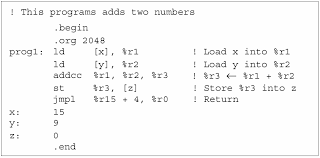
In this section, we will explore the origins of assembly language, tracing its development from early computing systems to modern architectures. You'll learn about key milestones, influential languages, and how assembly has evolved alongside technology...
Assembly language was invented for the Electronic Delay Storage Automatic Calculator (EDSAC) at the University of Cambridge...
The release of the Intel 4004 marked a significant shift...
The introduction of the Microsoft Macro Assembler (MASM) provided a powerful tool...
C and C++ compilers began supporting inline assembly...
The shift towards Reduced Instruction Set Computing (RISC) architectures...
A renewed focus on teaching assembly language in computer science curricula emerged...
This function highlights the foundational role that assembly language plays in understanding data representation. In assembly, programmers often work directly with binary and hexadecimal values, as these formats align closely with machine code. The ability to convert integers to hexadecimal not only demonstrates a fundamental programming skill but also illustrates how assembly language enables efficient manipulation of data at a low level.